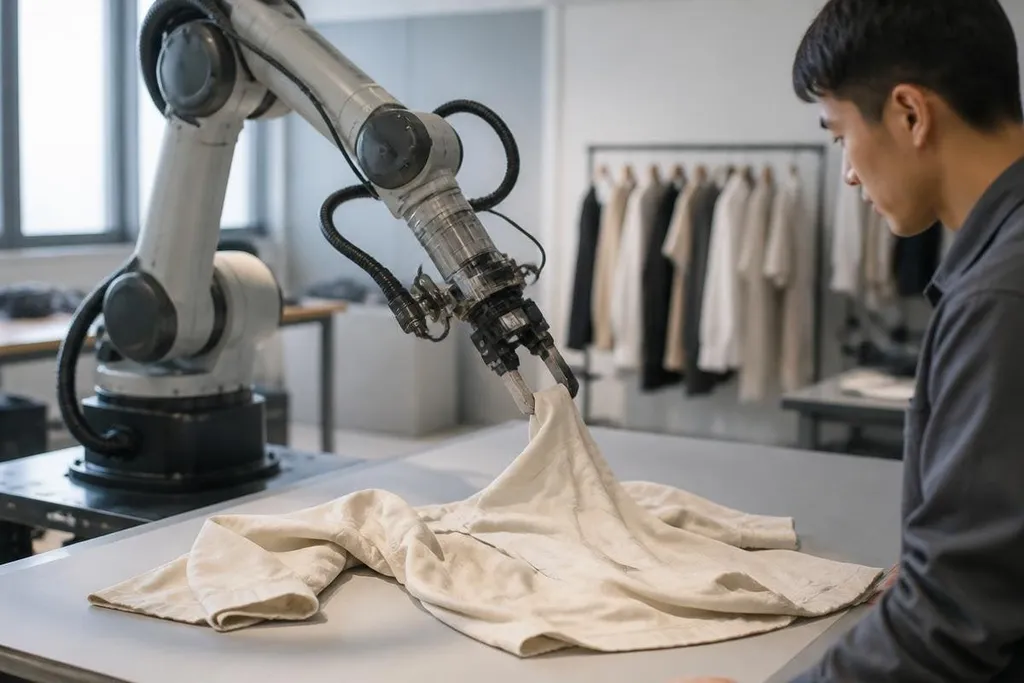
Fabric does not behave like a metal part. It folds, slips, stretches, and changes shape when a robot touches it. AI helps fashion robots read those changes, choose a grasp, and adjust their movement while the task runs.
- Cameras can find garment edges, seams, labels, and defects.
- Force sensing helps a gripper handle cloth without pulling too hard.
- Software can sort, fold, inspect, or move garments when each item looks different.
Why cloth gives robots trouble
A robot arm works best when an object has a fixed shape and a known position. A shirt on a table gives it neither. The sleeves may overlap, the fabric may hide an edge, and a small change in grip can alter the whole garment.
AI helps by turning camera images into useful information. A vision system can mark the garment’s outline, estimate where layers overlap, and find points where a gripper might pick up the cloth. A depth camera adds distance data, which helps the robot judge whether fabric is lying flat or folded over itself.
That process still needs limits. A camera can see a sleeve, but it may not know whether another layer sits underneath. The robot needs a second check from movement or touch before it pulls the fabric through a machine.
Where AI fits into the work
Fashion production includes tasks with different levels of difficulty. Some are easier to automate because the garment stays in a fixed place. Others need the robot to react to fabric movement at each step.
Inspection is a clear use for computer vision. A camera can look for misplaced seams, stains, missing labels, or changes in color. The software compares what it sees with set rules, while a human can review items that fall near the limit.
Handling needs more feedback. A gripper may use force sensors to detect contact, then reduce its grip when the fabric starts to stretch. Suction can pick up a flat section, but it may fail on porous cloth, loose edges, or several layers stuck together.
Sorting also benefits from vision. The robot can read a label or identify a garment by its shape, color, or size. The practical gain depends on how well the system deals with crumpled items, poor lighting, and garments that look alike.
Learning from repeated tasks
A fixed robot program tells an arm where to move. An AI system can use past images and sensor readings to choose between several movements. That matters when the same task changes slightly from one garment to the next.
The software still needs training data, clear safety rules, and a way to stop when its view is uncertain. A model that works on clean sample pieces may behave differently around dark fabric, shiny material, or a crowded work area.
A garment that completes the full task gives you more useful evidence than a clean demo clip. Robot24.com's fashion robotics reporting can tie that result to setup time, operator input, and rejected garments.
That context matters here because a successful demo does not show the cost of setup, supervision, or rejected garments.
What remains unproven
AI can help a robot react to cloth, but it does not remove the physical problems. The arm still needs the right gripper, enough reach, safe force limits, and a stable work surface. A vision model also needs checks when lighting or fabric changes.
The hardest tasks involve several actions in a row. Picking up a shirt is one task. Opening it, finding the neck and sleeves, placing it flat, and feeding it into another machine requires the system to keep track of the garment after each movement.
I'd be careful with any claim that AI makes fashion production fully automatic. The useful question is narrower: which step can run with fewer stops, fewer errors, or less manual handling?
A buying checklist for fashion robotics
Use these checks before a pilot or equipment purchase:
- Name the task: define the exact garment movement, inspection step, or packing job.
- Test fabric range: include thin cloth, stretchy material, dark colors, and layered pieces.
- Measure recovery: record how the system handles a bad grasp or hidden garment edge.
- Check human work: state when a person must review, reset, or remove an item.
- Price the full cell: include cameras, grippers, software, training, guarding, and service.
- Set the pass rule: agree on error rates and cycle time before judging the trial.
The next useful progress will come from systems that report their limits clearly. For a fashion factory, a robot that handles one named garment class with known error rates is easier to plan around than a demo that claims to handle clothing in general.